

About Galaxie and the Team Behind the Build
Galaxie Brands is an automation-driven cannabis co-packer and pre-roll manufacturer based in Puslinch, Ontario. The facility produces over 3 million pre-rolls and packages more than 1.5 million units of cannabis products every month, serving as a contract manufacturing partner to major Canadian brands. At that scale, operational data accuracy isn't a nice-to-have. Every batch, every lot, every partner brand depends on it being right.
Behind the build is Patrick McLean, Galaxie's Senior IT Specialist. A practical, self-taught IT generalist who started experimenting with AI coding tools about a year ago.
The Reality Every Operator Recognizes
Every manufacturing operation runs on more than one tool. Inventory, quality, planning, partner brand portals, master SKU lists, accounting. Each one shaped by the way that specific business actually runs. Off-the-shelf software can deliver the structural backbone, but no single product can anticipate every workflow your team needs. It's the nature of running a real operation.
For Galaxie, those workflow-specific needs were stacking up, and the team needed a way to close the gaps themselves, without long implementation projects or six-figure consulting engagements.
“For any of the things that maybe don't fit in that mold, I can adapt. I can build something for it.” - Patrick McLean
Why Elevated Signals Made It Possible
Elevated Signals was built from the start to fit alongside the rest of an operator's tech stack. Underneath the user interface is a structured, GMP-validated data layer with an open, documented API. That foundation is exactly what makes building on top of it possible.
That clarity is what made it possible for Galaxie's team to read their own data, understand how it connected, and build new tools against it, using off-the-shelf AI coding assistants instead of a professional services team.
Leveraging AI to Build for Their Operation
Using AI coding tools (Gemini, Claude, and Cursor all work; Galaxie's team uses Gemini and Google's Antigravity IDE), Patrick built a growing suite of bespoke solutions on top of Elevated Signals. A few examples of what becomes possible when an operations team applies AI to their own data:
Bulk operational tooling
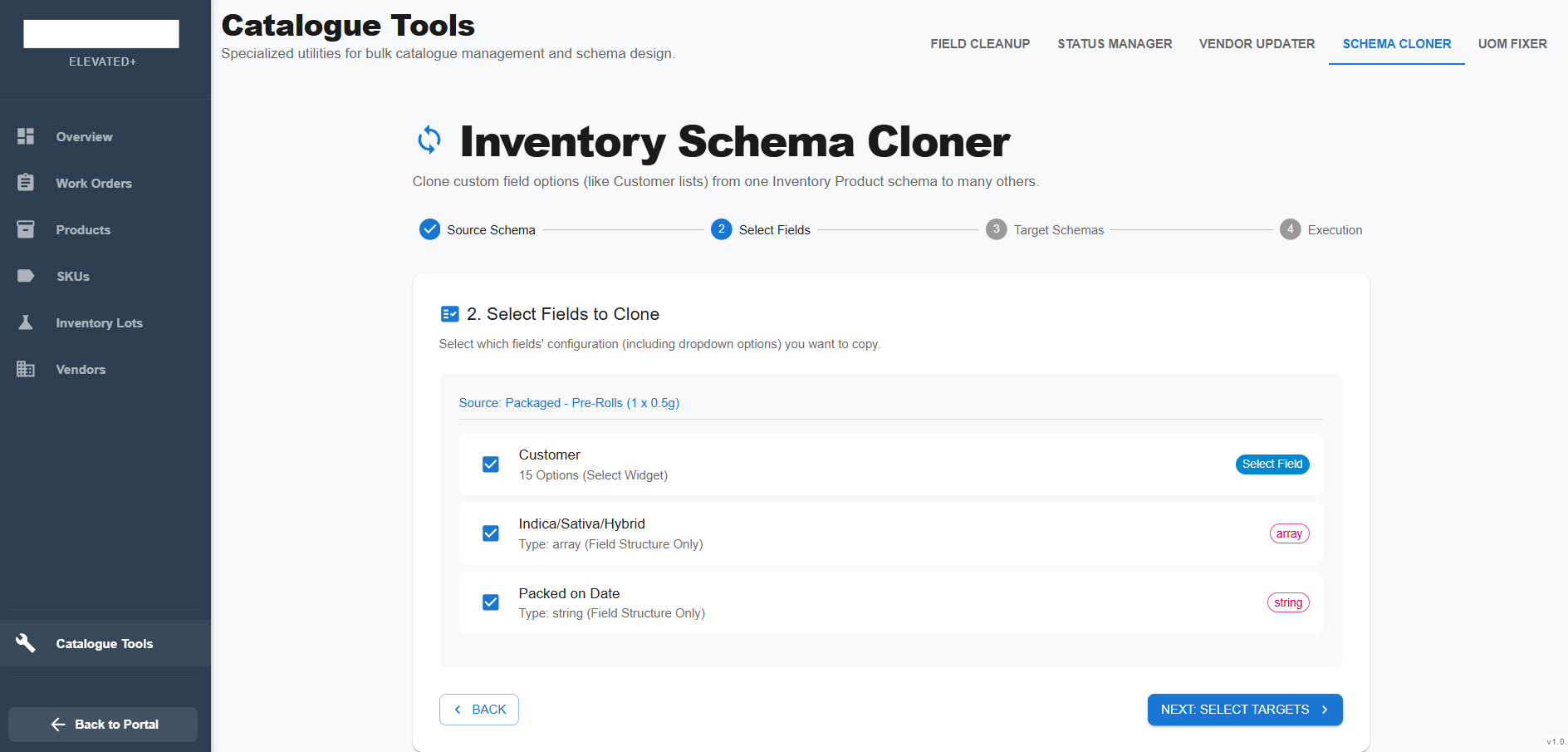
Custom bulk-action tools tailored to Galaxie's workflows. Applying status changes across thousands of inventory lots in a single action, or rolling out new fields across hundreds of products at once. Routine cleanup that would otherwise take days now happens in clicks.
Automated work-order discrepancy checks
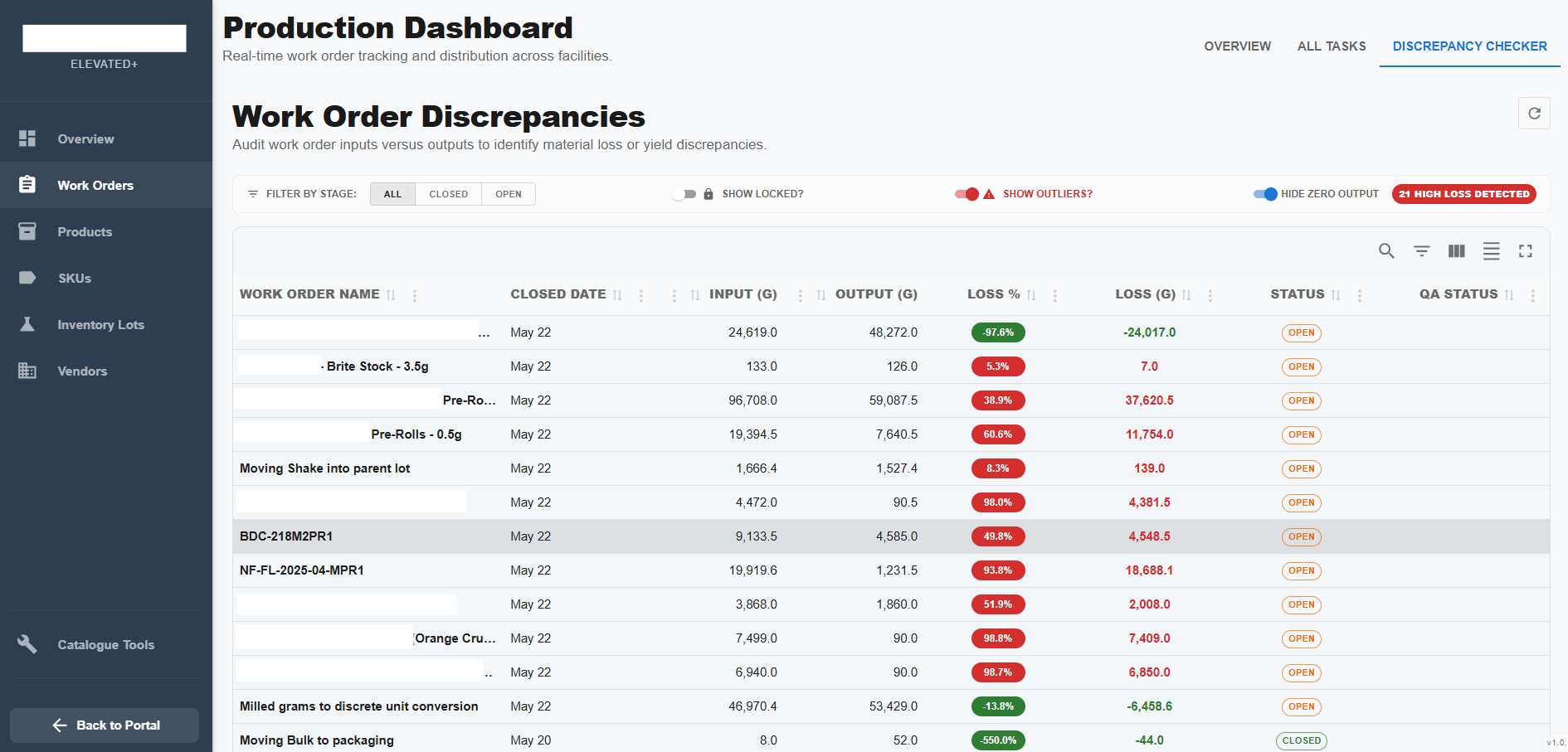
An automated discrepancy tool that flags variance between inputs and outputs across every work order. QA opens the dashboard and immediately sees which work orders need a second look. Built in a day, in active use within the same week.
Real-time operational dashboards
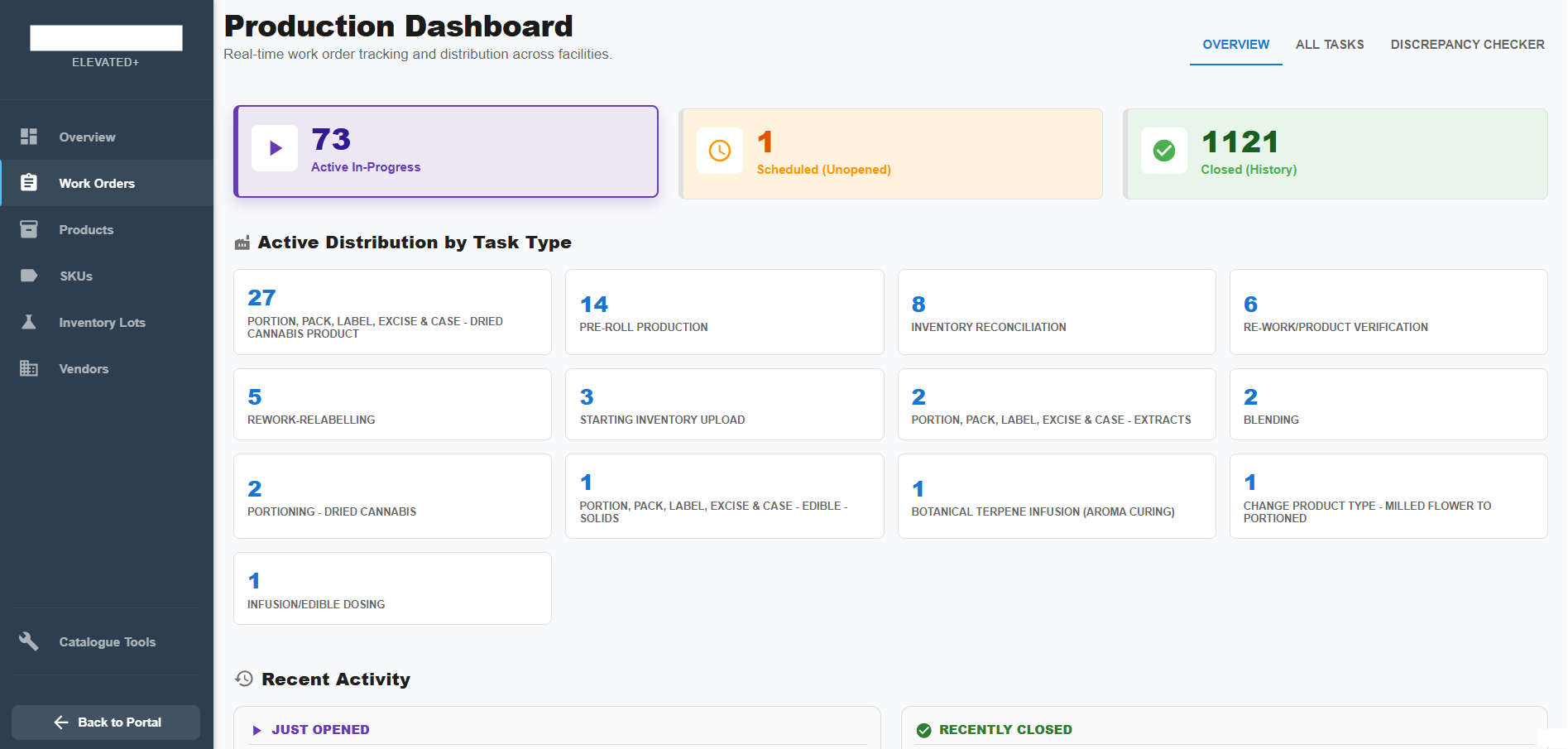
Live views of work orders, products, SKUs, and inventory lots, broken down the way Galaxie's team actually thinks about the business. Priorities shift on the floor every day, and the team sees the change instantly instead of waiting for someone to walk it down the hall.
A unified data layer
A custom database layer that retired a brittle internal spreadsheet, integrating Galaxie's master SKU list with their live Elevated Signals data. A single source of truth across systems, and the foundation a multi-brand contract manufacturer actually needs to scale.
Each tool closes a specific operational gap. Together, they remove the kind of friction that, at scale, is the difference between a business that grows and one that gets stuck.
{{quote-1}}
AI-Ready, and Future-Proofed by Design
None of this required a special integration. No proprietary AI connector. No waiting for a vendor to ship something new. The reason any AI coding tool works on top of Elevated Signals is that the foundation underneath is structured, accessible, and built to be reasoned about. Exactly what modern AI tools need to be useful.
That's also why this kind of work doesn't go obsolete when AI changes. Whatever comes next, whether that's better models, MCP, agentic workflows, or capabilities we can't yet name, Galaxie's team is ready for it because the data foundation underneath is.
Building this kind of bespoke tooling through a traditional ERP vendor's professional services team typically means a six-figure customization scope and a six-to-twelve-month project plan. Galaxie's team did it in months, at a small fraction of the cost, using tools available to anyone.
That's what future-proofing actually means. Not buying the latest thing or racing to adopt every new feature your vendor ships. It's choosing a platform built from day one to support whatever you (or your team, or your AI tools) want to build on top of it.
The Impact
✅ Operational drag reduced across QA, inventory, and shipping workflows
✅ Bespoke AI-powered tooling shipped at a fraction of the cost of a traditional ERP customization
✅ A unified data layer replacing fragile spreadsheets across systems
✅ Internal team empowered to build solutions tailored to their own operation
✅ AI-ready data foundation that scales with the business
✅ No vendor lock-in, no proprietary AI integration, no multi-quarter implementation
What's Next
Galaxie's team has a growing backlog of internal tools planned. Broader operational dashboards, deeper integration with shipping workflows, expanded bulk-action tooling. We'll be checking back in a few months to see where it goes next.
Closing
This story is about what becomes possible when your operational data sits on a foundation that's structured, accessible, and built to be extended.
That foundation is everything. Without it, AI coding tools can't help you. Spreadsheets and paper batch records can't be turned into bespoke solutions. The operators who'll be ahead five years from are the ones whose operational data has been ready for it all along, because they chose the platform that was built for that from the start.
That's what Elevated Signals was built for. Galaxie's team is one of many already putting it to work.
"We came to Elevated Signals to standardize our operations on a platform built around industry best practices. For anything that doesn't fit that mould, I can adapt. The API is clear, well-documented, and easy to build on top of — I'm pulling data, creating bespoke tools, and writing back to the system in a way that just wasn't possible with our previous platform.”


.png)




%20(1).png)
.png)
%202.png)