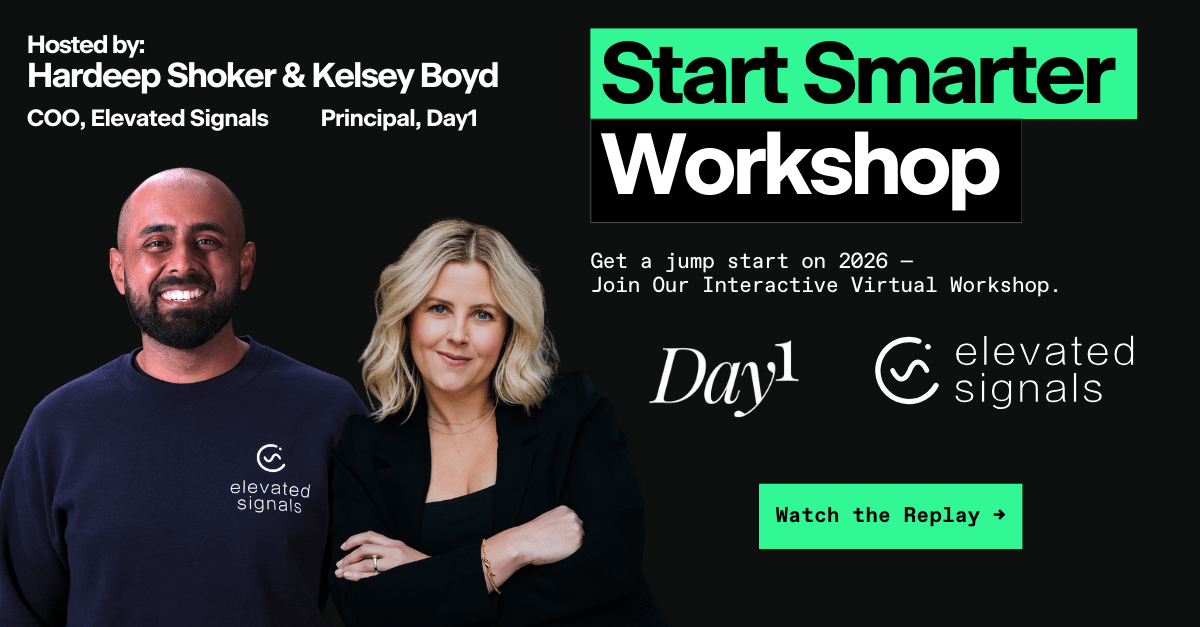

Read below or watch the session:
The Growth Flywheel: People, Process, Technology → Performance
Kelsey introduced a Flywheel Framework that’s helped dozens of manufacturers and scaling teams bring strategy, execution, and alignment into one unified model:
1. People
The energy source of your organization. Misalignment across teams creates drag. Alignment, clarity, and leadership transparency fuel acceleration.
2. Process
The engine. Scalable processes aren’t built on spreadsheets or tribal knowledge. Documented, repeatable workflows are essential for growth.
3. Technology
The accelerant. But tech only works if it connects. Fragmented systems create friction, not flow. Smart integration is key.
When these three components are aligned, the output is performance: faster execution, fewer errors, more confident decision-making, and strategic scale.

Why Great Plans Fail, And What to Do About It
One of the key themes from the Start Smarter workshop was this:
Planning isn’t the hard part. Following through is.
Many businesses set ambitious goals—but struggle to commit. Why?
1. Too Many Priorities
When everything is urgent, nothing moves forward. Without clear focus, teams get stretched thin and results stall.
2. No Clear Ownership
Plans lose momentum when actions don’t have owners or deadlines. Teams need clarity on who’s doing what, by when.
3. Disconnected Systems
Hardeep highlighted how siloed tools create bottlenecks—slowing down data, decisions, and execution.
“When your digital supply chain breaks, your physical supply chain breaks too.”
4. Constant Pivoting
Kelsey warned against overreacting to short-term pressure. Weekly plan changes cause “whiplash” and erode team trust.
✅ The Fix: Make Planning a Habit, Not an Event
The most successful manufacturers treat planning as an ongoing practice, and not a once-a-year activity.
In the workshop, participants were encouraged to:
- Define a clear, 12-month vision
- Use the Flywheel (People, Process, Tech) to identify blockers
- Revisit plans quarterly to recalibrate, realign, and recommit
“If you don’t revisit the plan, it will fail you.”
Smarter Planning Starts with a One-Year Vision
A central tool in the workshop was the One-Day Vision exercise, where participants outlined what success would look like 12 months from now.
“If you're popping champagne a year from now, what will be true about your business?”
Answers ranged from:
- Scaling production without chaos
- Hitting revenue goals with leaner teams
- Replacing manual QA/compliance tasks with automation
- Creating tighter alignment between departments
- Reducing time spent on audits, reporting, and tracking
By establishing a clear, time-bound vision, teams could reverse-engineer a roadmap that’s focused, actionable, and flexible.
Technology Is Your Strategic Infrastructure
Hardeep shared a thoughtful analogy during the session:
“You don’t just have a physical supply chain — you also have a digital one. And when that breaks down, your whole business slows down.”
He broke it down further:
- Most manufacturers are unknowingly creating bottlenecks by manually bridging systems
- The solution isn’t just buying more and more software, it’s choosing tools that connect, integrate, and scale
- Elevated Signals was built API-first, meaning it fits into broader ecosystems instead of locking you in
That’s why Elevated Signals introduced CIO-as-a-Service—giving fast-growing manufacturers the strategic tech leadership they need without the cost of a full-time CIO.

A Roadmap That Actually Moves You Forward
Kelsey laid out a simple, effective roadmap method, used by high-growth companies across sectors:
Step 1: Reflect
Use the Flywheel to audit your current state. Ask:
- Where are we leaking time or visibility?
- What systems are slowing us down?
- Which workflows can’t scale as we grow?
Step 2: Vision
Define what success looks like by end of year. Be specific:
- Revenue or production targets
- Team structure and operating rhythm
- Systems and tools that support scale
- Compliance benchmarks or QA wins
Step 3: Action
Translate strategy into motion:
- List out key initiatives
- Assign clear owners and deadlines
- Prioritize based on impact and dependencies
📌 Pro tip: Don’t just set goals, set review rhythms. Revisit your roadmap quarterly to recalibrate and maintain momentum.
Visibility is the New Competitive Advantage
Whether you're scaling cannabis operations, launching new SKUs in nutraceuticals, or chasing compliance in food and beverage, the principle is the same:
You can’t scale what you can’t see.
Legacy ERPs are slow to adapt. Spreadsheets are fragile and siloed. Modern manufacturing demands clarity in motion- real-time data, aligned teams, and systems that scale with you, not against you.
Ready to Bring Strategic Clarity to Your Tech Stack?
CIO-as-a-Service by Elevated Signals gives you access to senior-level technology leadership, without the full-time overhead.
We help regulated manufacturers build scalable, connected systems that eliminate bottlenecks, increase visibility, and unlock growth.
👉 Book a discovery call with our team
Let’s build your roadmap, with the right tools to get there.

.png)



%20(1).png)
.png)
%202.png)